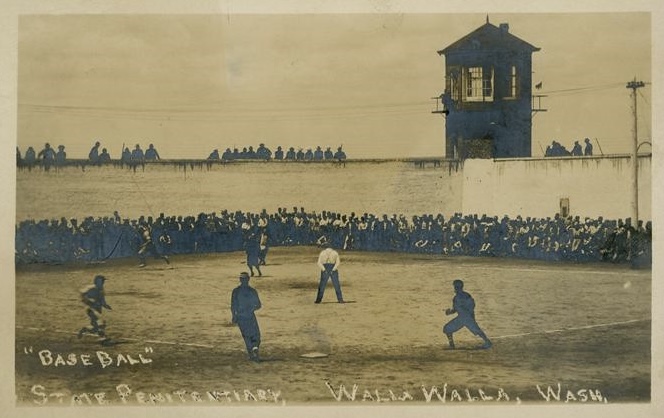
Authentic circa-1910 postcard: baseball game at the Washington State Penitentiary in Walla Walla, with watchtower and inmate spectators

Washington State Penitentiary Mavericks · Baseball Team Est. 1907

BALLnCHAINS

Swinging for Redemption in Walla Walla

The forgotten story of the prison baseball team at the Washington State Penitentiary — the men who played, the families who waited, and the questions about justice and second chances that still haunt us a century later.

A Book by Lucy Ramsdell

New Year's Day, 2023

A Rabbit Hole

I was deep in research for Pioneers of the Pacific — a forthcoming baseball documentary by Kirk Findlay of Findlay Films — when I typed “Mavericks” and “Kurt Russell” into newspapers.com and stumbled into Walla Walla, Washington.

What I found wasn't the famous Portland team. It was a long-forgotten prison baseball team called the Mavericks, with a history stretching all the way back to 1907. Behind the walls of the Washington State Penitentiary, men were playing ball — and their stories were waiting in the archives.

A 1939 team photo with a list of inmates' last names lit the fuse. Mugshots. Crime ledgers. Inmate-written newspapers with their own sports columns, editorials, and poetry. And box scores that listed the players only by their inmate numbers.

Those numbers stopped me cold. I've never spent a day behind bars, and I'd never compare a paycheck in the free world to a prison sentence — but in a much smaller way, I know what it feels like to be reduced to a number. I spent 13 years in the grocery business and another 21 representing those workers through my union, and somewhere along the way the corporate mentality took over and they literally issued us employee numbers. It left me feeling insignificant. So when I saw a box score full of digits where names should have been, something in me wanted to give these men their names back — the same impulse the reform-minded warden and Washington state leadership seemed to have in the early 1900s, when they believed a man behind the walls was still a man.

None of that erases the harm these men caused. Every crime had a victim, and I carry their stories with me too — I can just as easily picture myself in their shoes. Giving an inmate his name back isn't excusing what he did; it's refusing to pretend he stopped being a person the day the cell door closed.

So I started matching numbers to names, names to family trees, family trees to living relatives. I tracked down their lives after prison — the second acts no one had bothered to write. What began as a sidebar became three years of obsession with prison and prison baseball history — and a question I still can't shake: does the way we punish actually work?

Ball 'n' Chains weaves together prison baseball, the men who played it, and the lost history of the Washington State Penitentiary in Walla Walla — one inning at a time.
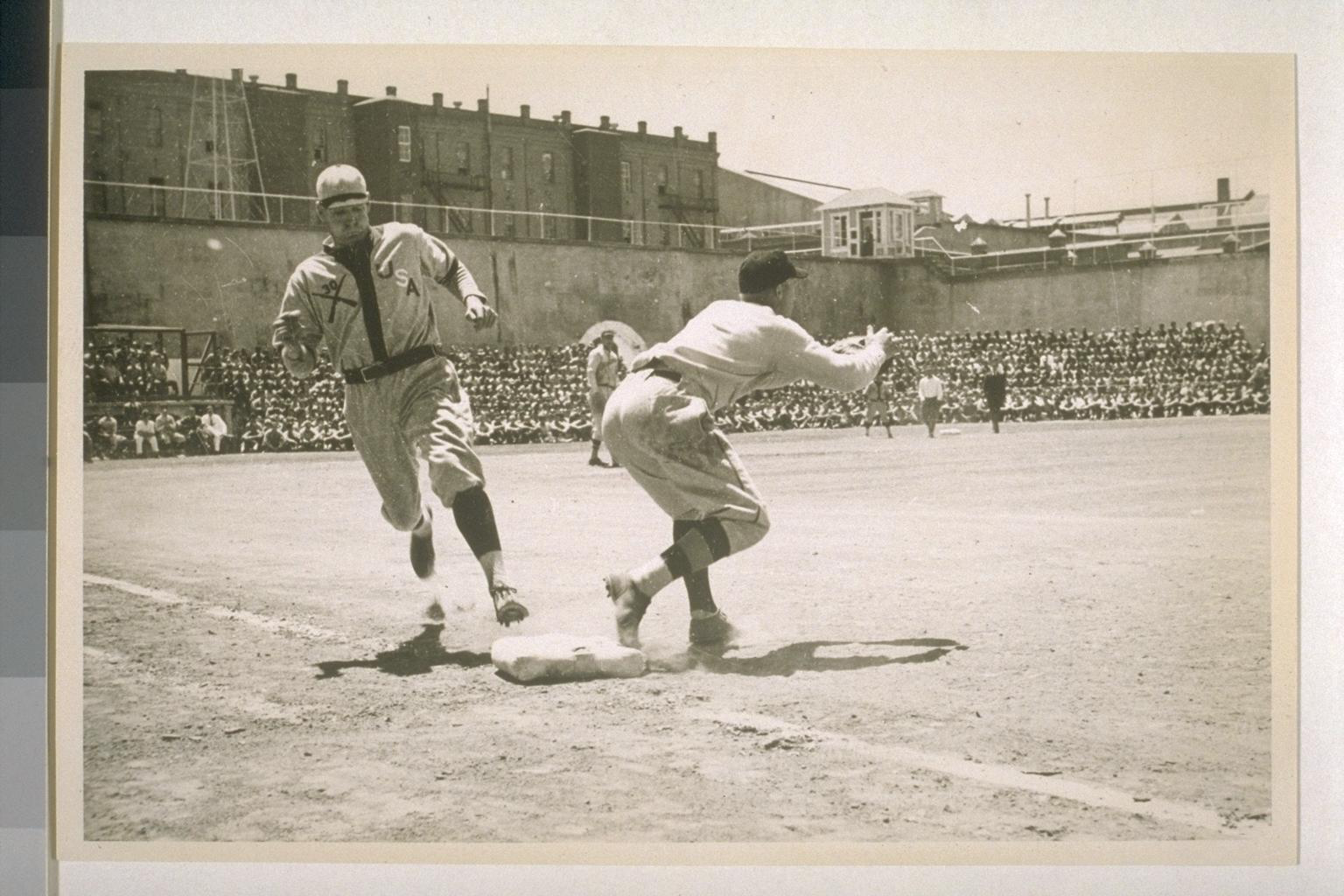
Black-and-white photograph of a baseball play at the Washington State Penitentiary, runner sliding into base while inmates watch from the prison wall

Inside the walls · circa 1920s

A Story Apart

First to Break the Color Barrier

“Eight years before Jackie Robinson broke the major-league color line, the Washington State Penitentiary had already integrated its own diamond — and one of its pitchers had Negro League fame that preceded him.”

His full story — and how it ended — only inside the book.

Inside the Book

Three Threads, One Story

1915 →

First Through the Gate

The Mavericks were the first prison team allowed to leave the walls and play outside opponents — charity exhibition games at Borleske Park for a fish hatchery in 1915, the Red Cross in 1939, and other special occasions when the town turned out to watch.

After the Gate

The Lives That Followed

What became of these men after their numbers came off — the marriages, the jobs, the disappearances, and the descendants still carrying the story today.

Rehabilitation

What the Box Scores Reveal

The rehabilitation programs of the early 20th century — and how a baseball diamond inside the walls became one of the era's quietest experiments in what punishment was actually for.

The Roster

Meet the Mavericks

Real men. Real box scores. A few of the inmates whose lives are traced in Ball 'n' Chains.

A few of the faces I pulled back out of the ledgers — turning a forgotten roster into the men who once filled it.

WSP Mavericks#4830
Vintage mugshot of Thomas Blair, inmate at the Washington State Penitentiary

Thomas Blair

First Base

On the Mavericks roster — and inside for a jewelry heist. A steady glove at first who became one of the team's recognizable faces.

WSP Mavericks#6866
Vintage mugshot of Luke McLuke, inmate at the Washington State Penitentiary

Luke McLuke

Manager · 1st Mavericks

AKA Thos. Dolan. A character who deserves his own book — manager of the very first Mavericks team and one of the most colorful figures in the prison's early athletic history.

WSP Mavericks#5109
Vintage mugshot of David McCardle, inmate at the Washington State Penitentiary

David McCardle

Pitcher

Did time in nearly every correctional institution along the West Coast — and was an awfully good pitcher anywhere they let him take the mound.

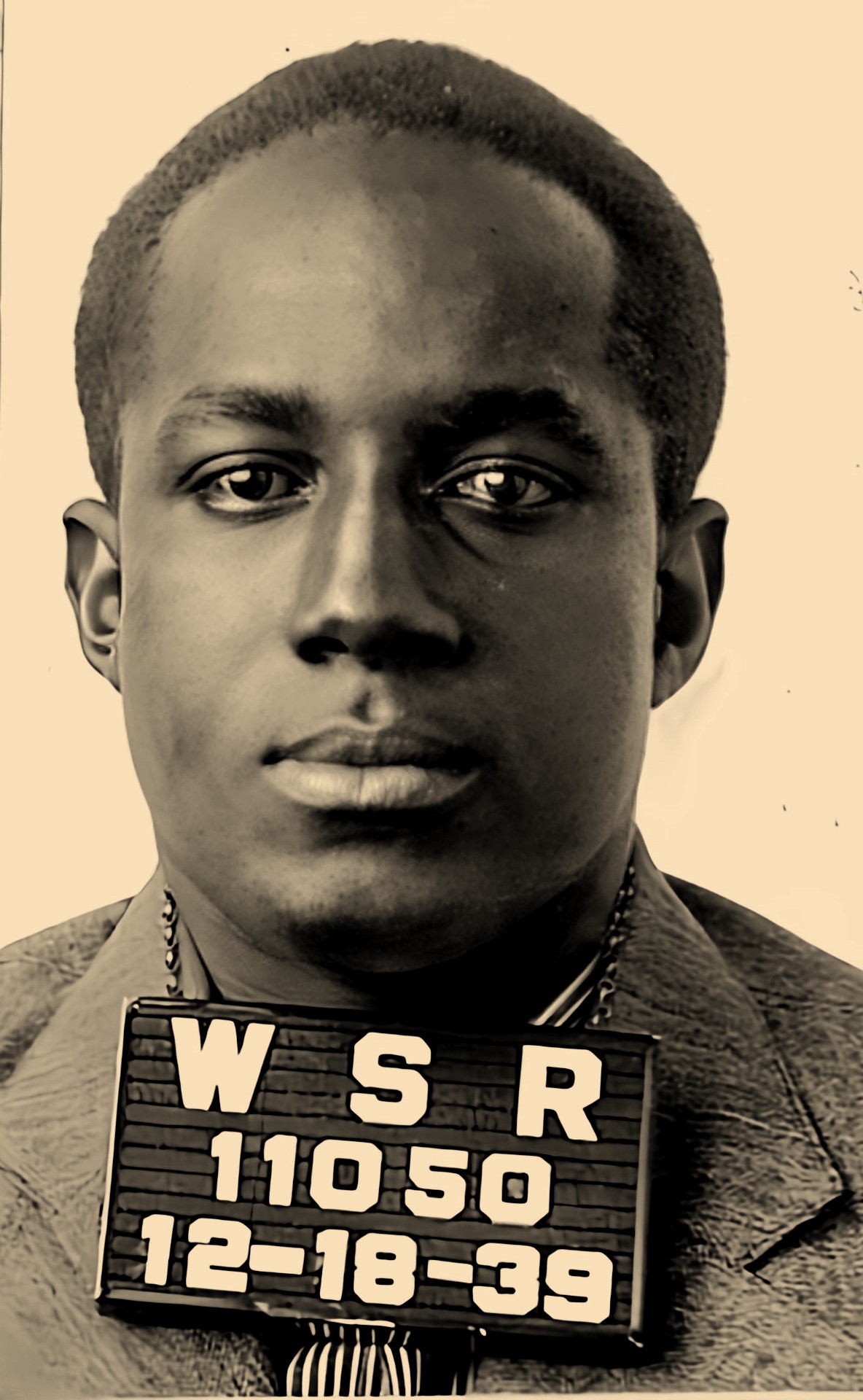
WSP Mavericks#11050
Vintage mugshot of Earl Woodson, inmate at the Washington State Penitentiary

Earl Woodson

Pitcher · "Mr. Baseball"

AKA "Woody." Born 1910 in Clarksville, Arkansas. Pitched in the Negro Leagues for the Omaha Monarchs and Yakima Browns before arriving at the Washington State Penitentiary in 1939. His story after the mound is one you have to read to believe.

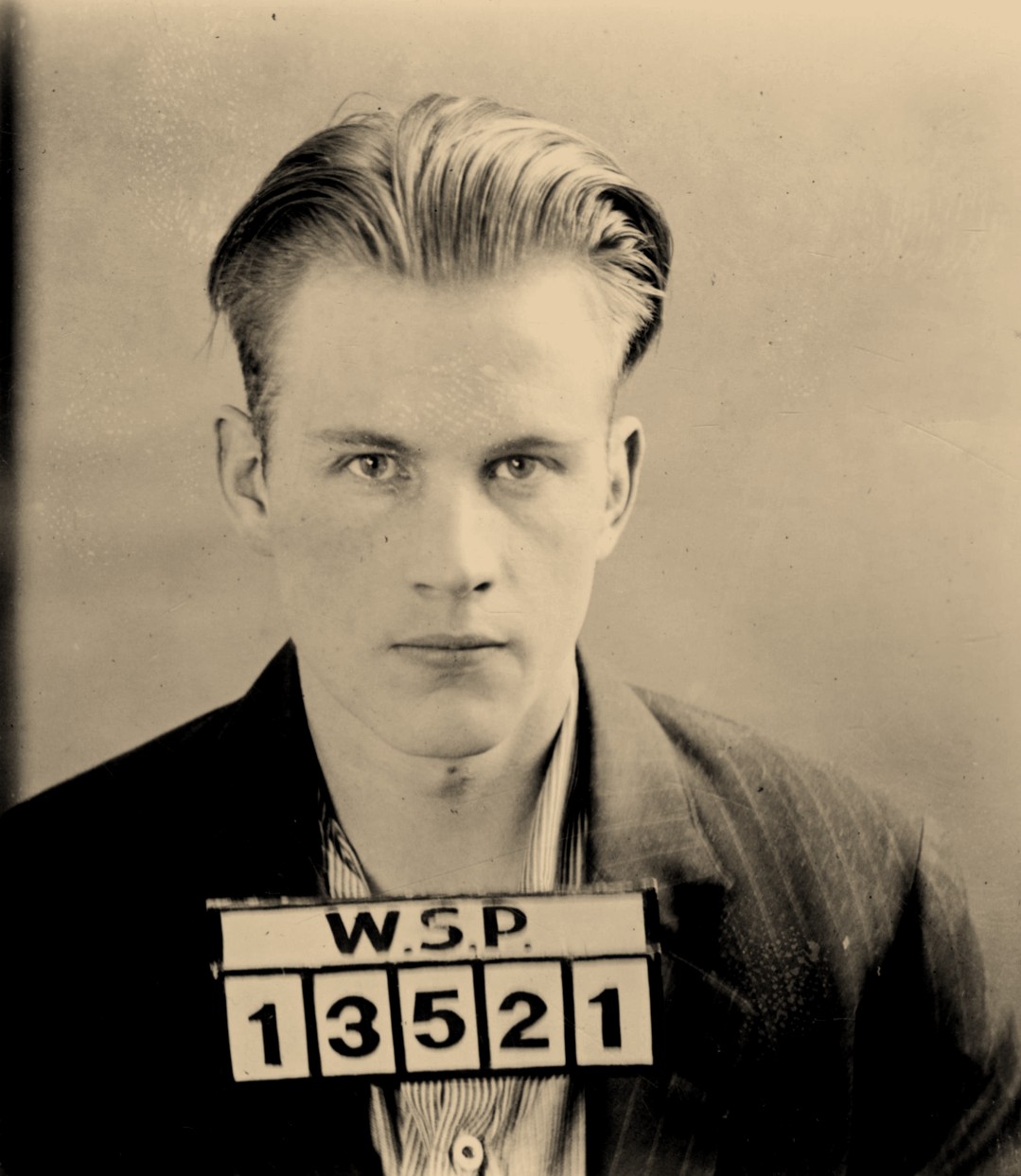
WSP Mavericks#13521
Vintage mugshot of Jacob Loe, inmate at the Washington State Penitentiary

Jacob Loe

The Taxi-Cab Bandit

Known to the papers as "the taxi-cab bandit." His mugshot — slick hair, sharp suit, hard stare — could pass for a movie still.

WSP Mavericks#3743
Vintage mugshot of William Royce, inmate at the Washington State Penitentiary

William Royce

Wrongfully Convicted

Sentenced to eight years for allegedly stealing a typewriter. Later established to be innocent — one of the quiet tragedies tucked into the ledgers.

More faces, more stories, in the pages ahead.

Portrait of author Lucy Ramsdell in an archival library

The Author

Lucy Ramsdell

Lucy is a documentary researcher and author whose work on Pacific Northwest baseball led her unexpectedly into the archives of one of America's oldest prisons.

“The first time I saw the team photo and looked into the faces of those incarcerated men, I had to know — what happened to them? How did they get there in the first place, and what became of them after they were released? Then I learned how far back the team went, and the history pulled me in like a vacuum.”
— Lucy

For twenty-one years as a union representative in the Pacific Northwest, Lucy watched a pattern repeat itself: men who had done their time, proved themselves reliable on the job, and were still fired during probation when a background check surfaced an old felony. They had already shown up, worked hard, and earned their place — but company policy did not care. She lobbied and advocated alongside her union to pass “Ban the Box” legislation so employers could not ask about convictions on applications, yet the law still did not go far enough. She kept asking the same question: if someone serves their sentence, should they keep being punished after release?

That question is the through-line of Ball 'n' Chains — a labor of love built from hand-set newspaper type, dusty ledgers, prison-yard box scores, and the kindness of strangers who generously shared the stories and details that helped bring this book to life.

After three years immersed in prison records, Lucy turned to writing children's books — including the Cactus Commune series — a deliberate turn toward something joyful after years of reading about men, crimes, and punishment. She continues to balance both projects, with the majority of her time and energy devoted to bringing Ball 'n' Chains to publication.

Three Years of Research

With the Help of Many

Archivists, historians, librarians, and the descendants of the men themselves — every page owes a debt.

  • Bob FreemanAuthor, Washington State Penitentiary: A Short Conversational History
  • Jewell DunnDigital Archivist, Olympia
  • Joe DrazenRetired Penrose Librarian · Bygone Walla Walla
  • Terry GotschallHistorian, Whitman College · SABR
  • Ty PhelanAuthor, Darkhorse: The Jimmy Claxton Story
  • Lyle Kenai WilsonAuthor, Sunday Afternoons at Garfield Park
  • Penrose Library StaffWhitman College · Archives & Special Collections
  • Fort Walla Walla MuseumVolunteers & Docents · Living History

Closest to My Heart

Kirk Findlay

My partner, who always inspires and encourages my creativity. None of these pages would exist without you.

Coming Soon · From Page to Screen

A Documentary in the Works

This book began while I was researching Pioneers of the Pacific, a forthcoming documentary by Kirk Findlay of Findlay Films. Together we're now developing a companion film adaptation based on Ball 'n' Chains — bringing the Mavericks, the archives, and the walls of Walla Walla to the screen.

Saturday Afternoons ~ 1-4 PM

The Women at the Gate

Behind almost every man on the Mavericks roster stood a wife, a mother, a sister, a daughter — women who rode trains and wagons across the Palouse, sometimes for two days, to spend an hour on the visitors' bench at the Washington State Penitentiary.

They brought clean shirts, peach preserves, news from home, and updates from the parents, siblings, wives, and little ones waiting for them. They wrote the letters that kept these men tethered to the world outside the wall — and, when the gates finally opened, they were the ones waiting on the other side.

History rarely recorded their names. This book tries, wherever the archives allow, to give them their rightful place in the story.

For Publishers, Agents & Rights Holders

An Untold Chapter of American History

Ball 'n' Chains — Swinging for Redemption in Walla Walla is a narrative nonfiction account of the WSP Mavericks: the prison baseball team that became a fixture of Pacific Northwest baseball from 1907 into the late 1950s, drawing thousands of paying spectators across more than five decades to the special bleachers built above the walls of a penitentiary that had stood since 1886.

The book sits at the intersection of sports history, rehabilitation and second chances, and Pacific Northwest Americana — a story the archives have kept, but the bookshelves have not. Team photos, archival portraits, original game programs, prison newspapers, and never-published letters anchor the manuscript.

I'm seeking a publishing partner to bring it to readers. Download the one-page pitch sheet below, or reach out for sample chapters and a conversation.

Print edition: 8.5 × 11 in · 0.125 in bleed · crop & registration marks · or reach out below for sample chapters

Your details go directly to Lucy. No mailing list, no third parties.

Common Questions

About Prison Baseball in Walla Walla

What is the Washington State Penitentiary Mavericks baseball team?
The WSP Mavericks were a prison baseball team formed in 1907 at the Washington State Penitentiary in Walla Walla, Washington. They played organized baseball for more than five decades, drawing thousands of spectators to games inside and eventually outside the prison walls — becoming a unique chapter in Pacific Northwest baseball history.
Does Ball 'n' Chains touch on prison reform?
It does — though the book is first and foremost the story of a team. Along the way it surfaces what early-20th-century rehabilitation looked like inside the Washington State Penitentiary, sets those reforms against what was happening in prisons around the country, and shows that WSP was often ahead of its time. The questions it raises about second chances still feel current.
What makes Walla Walla significant in Pacific Northwest baseball history?
While Walla Walla is known for wine and wheat, it also housed one of the longest-running prison baseball programs in the country. The Washington State Penitentiary's team played from 1907 into the late 1950s, with charity exhibition games at Borleske Park and box scores recorded in inmate-written newspapers.
Who are the players featured in the book?
More than a dozen Mavericks anchor the book, each with his own chapter — among them a taxi cab bandit, a man who did eight years for stealing a typewriter, a left-handed pitcher who'd thrown in the Negro Leagues, and an inmate who walked out of Walla Walla and eventually became a Hollywood radio producer and small-town newspaper publisher. Lucy follows each man from the crime that landed him inside, through his season on the team, to wherever the trail led after release — sometimes to obscurity, sometimes to a second life no one in his family ever knew about.
What research went into this book?
Three years of archival work. I matched inmate numbers to names in Washington State ledgers, read prison newspapers with sports columns and poetry, interviewed descendants, and dug through collections at Whitman College, Fort Walla Walla Museum, and SABR. I built dozens of family trees on Ancestry.com, read hundreds of newspaper articles about crimes and court cases, and learned more about Pacific Northwest history — plus some surprising tidbits about WWI and WWII that even impressed my historian friend from Whitman.

Be First Through the Gate

Join the Waitlist

The book is still being written. Sign up for occasional updates, a behind-the-scenes look at the research, and first dibs when Ball 'n' Chains is ready to read.

No spam. Unsubscribe any time.